


I'm too sad to
Αφίσα / Γιγαντοαφίσα
ΕΒΓΕ
Αφίσα / Γιγαντοαφίσα
ΕΒΓΕ
Πελάτης
Aria Boumpaki
Περιγραφή
"I'm too sad to" is a multi-sensory, nocturnal landscape of resistance, made of flesh, bones, sounds, voices, smells and objects. Three dancers and a musician seek ways to resist the kinetic inertia of grief by opening up a field of action that embraces fall, failure and darkness and celebrates imperfection, weakness and vulnerability.
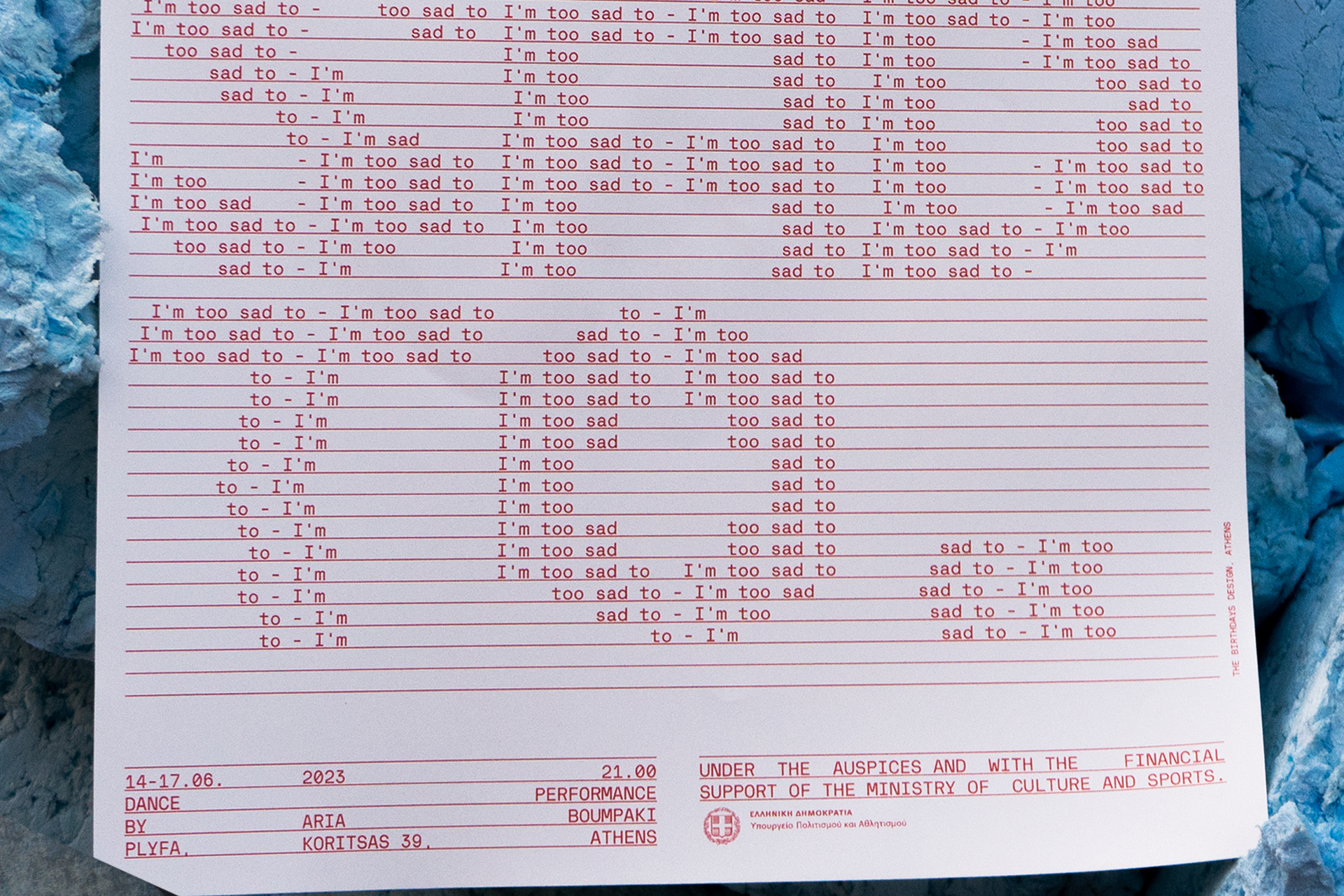
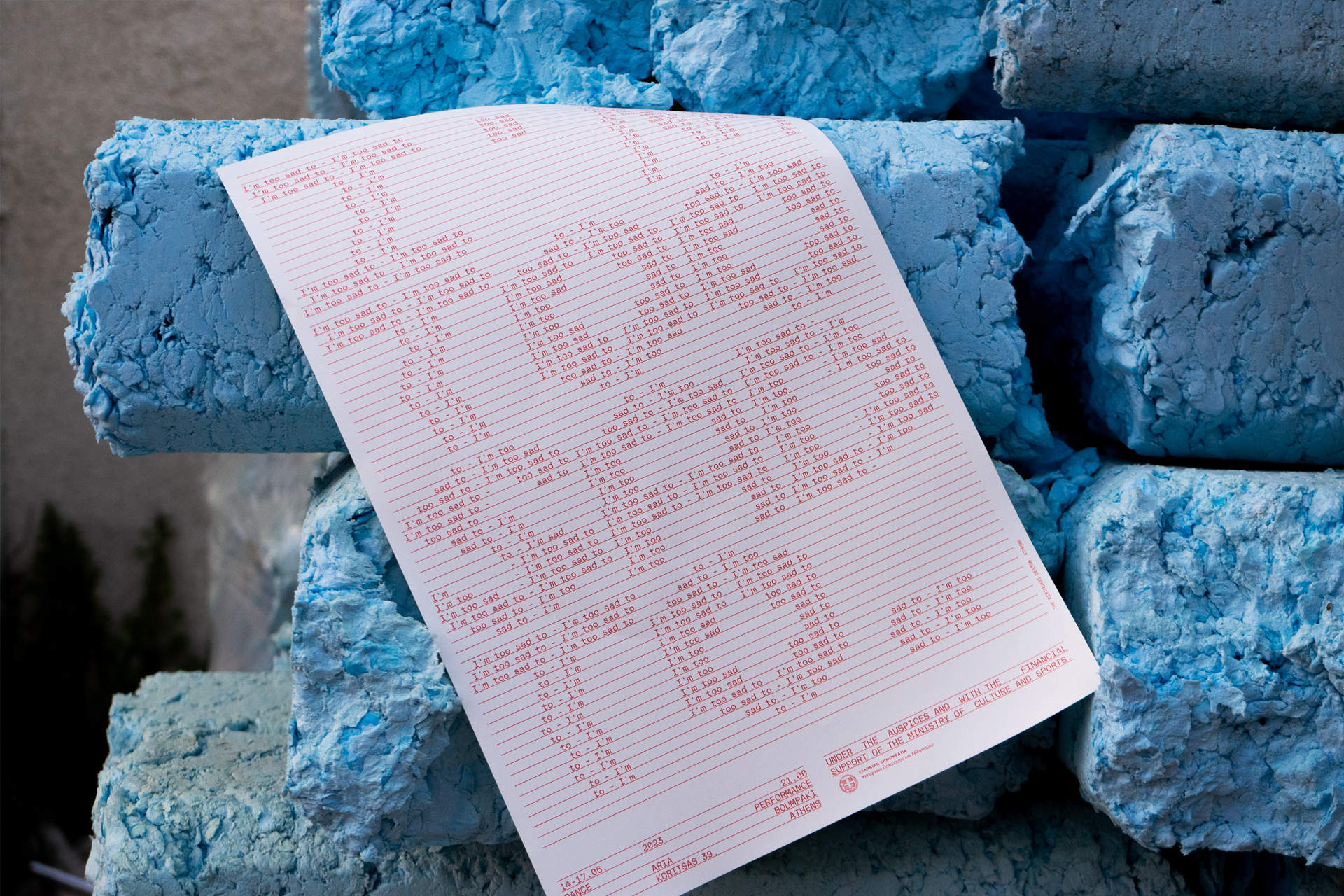
Both in the poster also in performace, this is a game of orientation, chosing the activation of the senses as a gateway to the world and the Other. Where the body sees its skin not as a boundary, but as a spreading surface, as a connective tissue that connects it to the universe. Rejecting the thought that the human body is a self-contained, closed entity, a body under negotiation, driven by questions, is welcomed. As Deborah Hay said: "My body in question is the dance." We add, so is the language.
As paradoxical as it sounds, "I'm too sad to" is a promise of light for a new start of the world, for a leap towards impossibility.
I'm too sad to
Αφίσα / Γιγαντοαφίσα
ΕΒΓΕ
Αφίσα / Γιγαντοαφίσα
ΕΒΓΕ
Πελάτης
Aria Boumpaki
Περιγραφή
"I'm too sad to" is a multi-sensory, nocturnal landscape of resistance, made of flesh, bones, sounds, voices, smells and objects. Three dancers and a musician seek ways to resist the kinetic inertia of grief by opening up a field of action that embraces fall, failure and darkness and celebrates imperfection, weakness and vulnerability.
Both in the poster also in performace, this is a game of orientation, chosing the activation of the senses as a gateway to the world and the Other. Where the body sees its skin not as a boundary, but as a spreading surface, as a connective tissue that connects it to the universe. Rejecting the thought that the human body is a self-contained, closed entity, a body under negotiation, driven by questions, is welcomed. As Deborah Hay said: "My body in question is the dance." We add, so is the language.
As paradoxical as it sounds, "I'm too sad to" is a promise of light for a new start of the world, for a leap towards impossibility.