



Πειραματική εργασία
Έπαινος
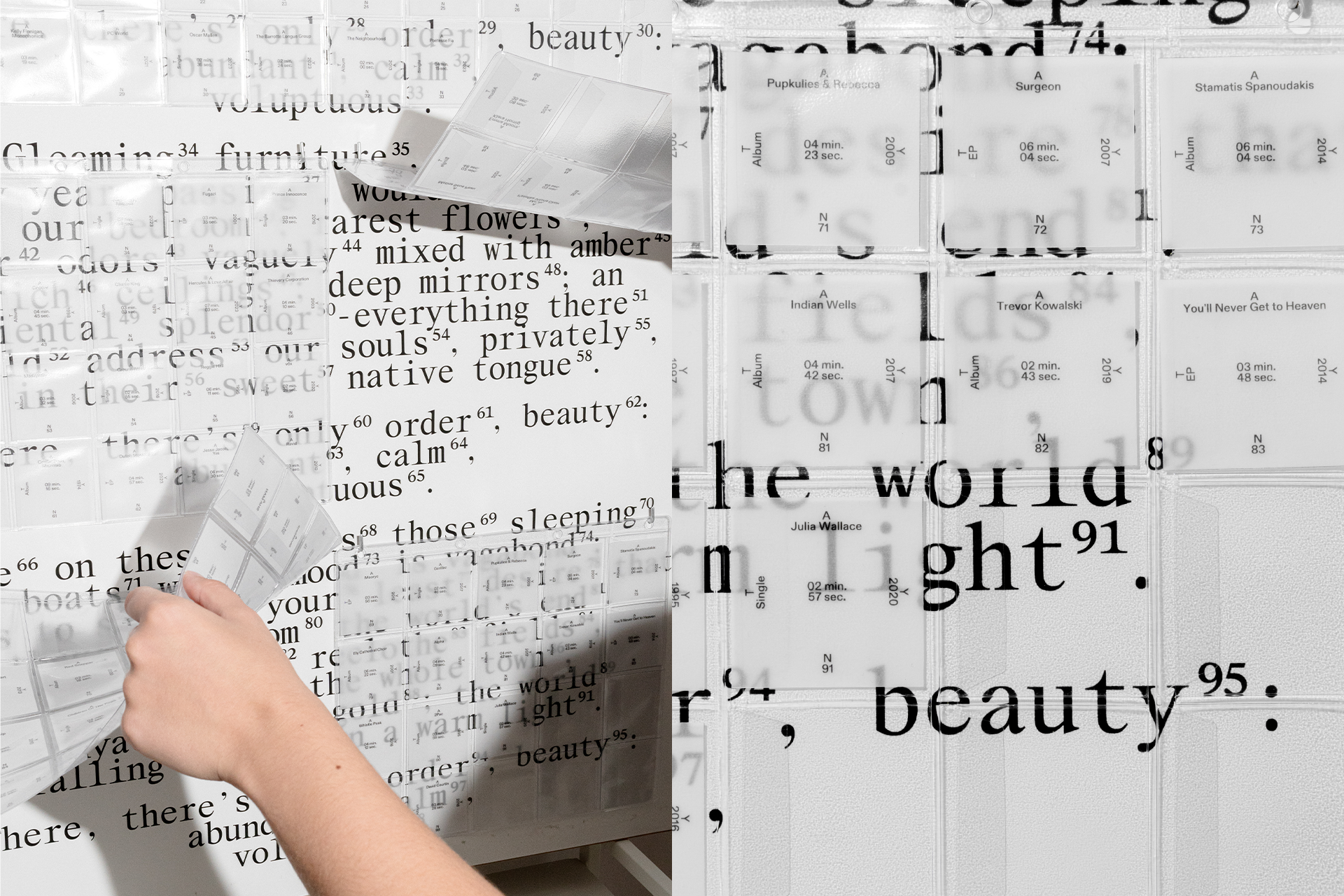
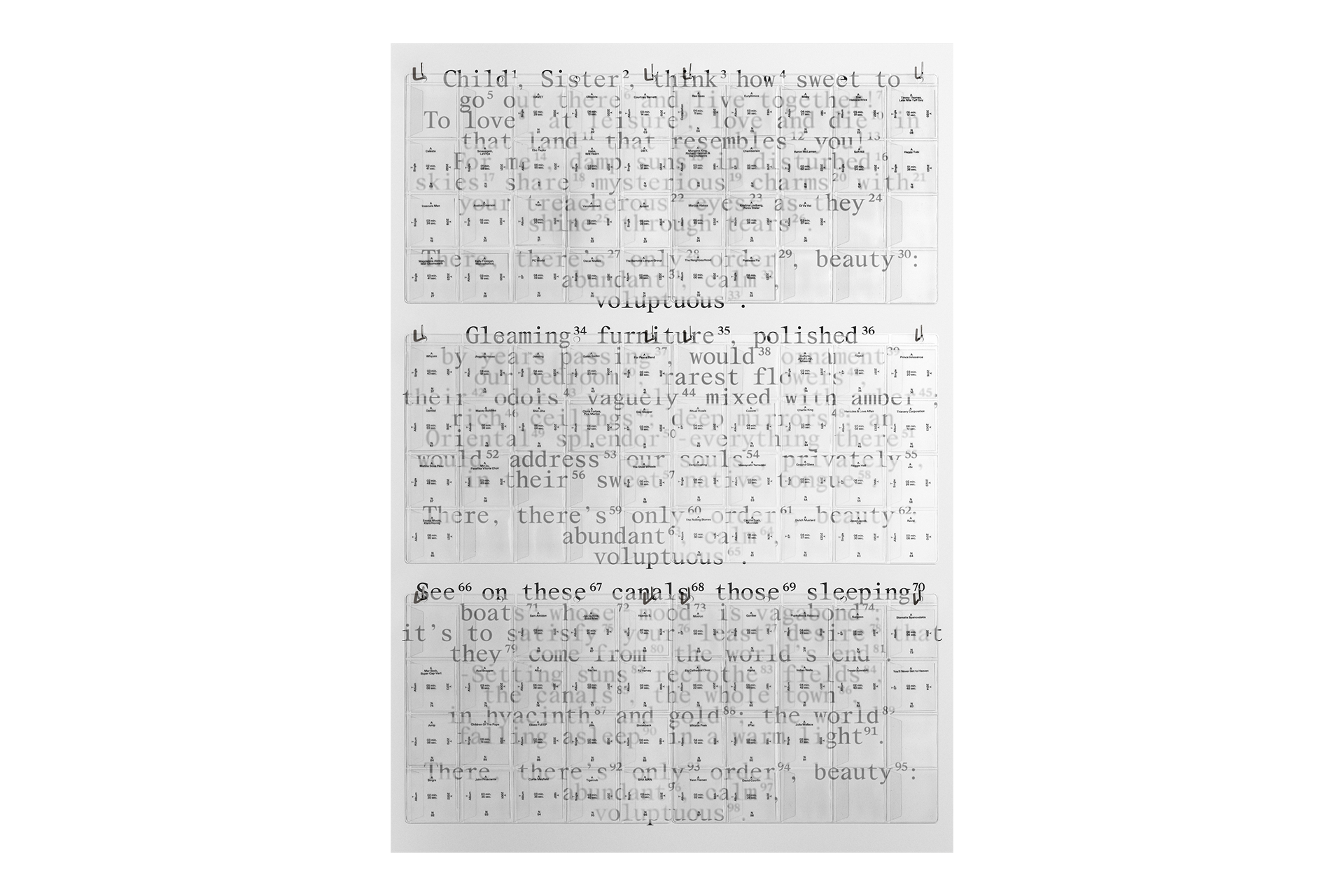
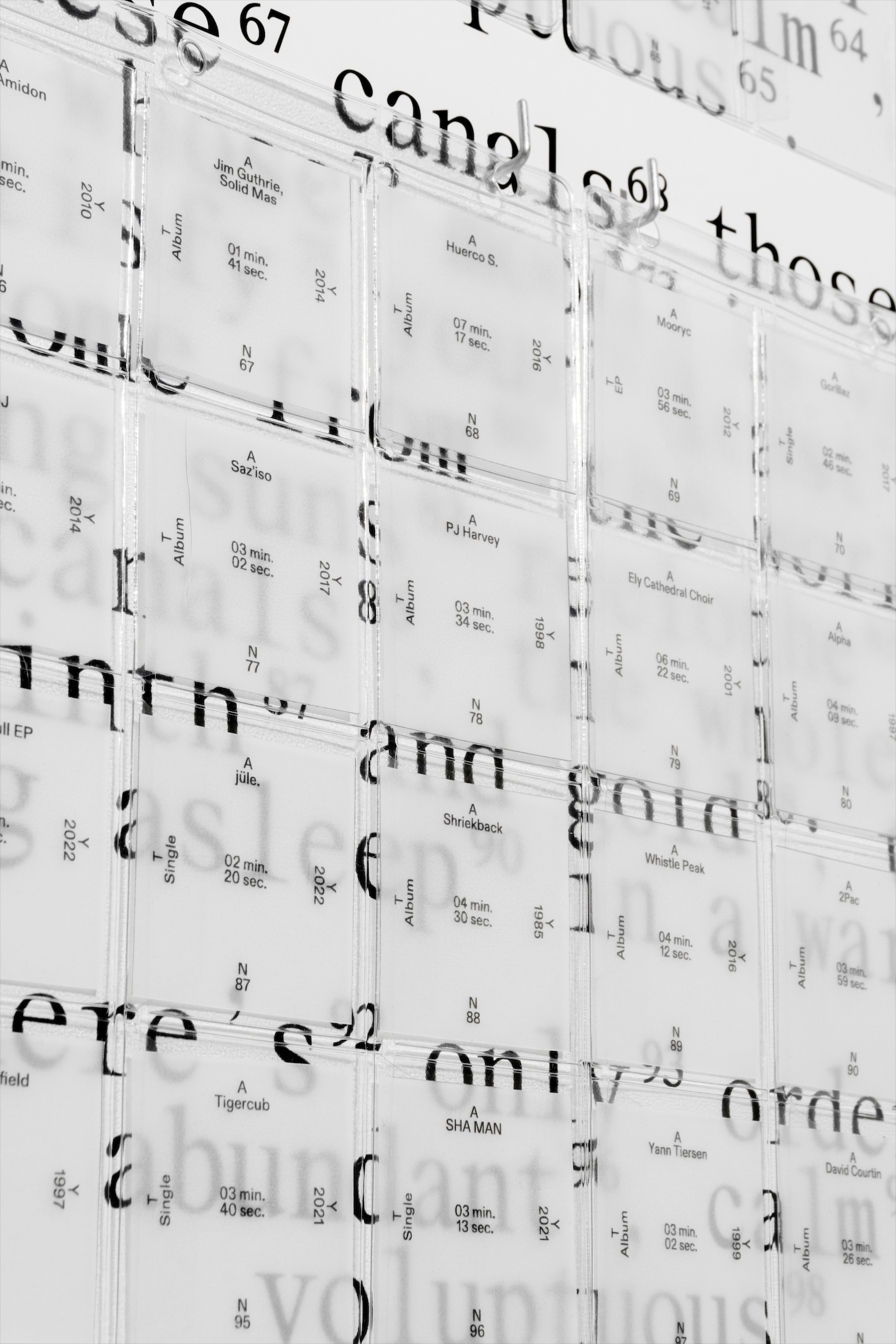
Acoustic Poem is a mixed media interactive poster installation that provides an alternative visual and audio representation of the poem "Invitation to the Voyage" by Charles Baudelaire. It acts as a translation machine, transforming written words into a multidimensional experience. It explores the interplay of language, sound, and algorithmic systems, reimagining a static poem as a dynamic entity. By leveraging computational processes, it engages with the concept of infinite interpretation, allowing audiences to navigate a layered, hybridized landscape of text and sound. The poem is divided into 98 sections, each paired with a unique song that captures its essence. An algorithm analyzes the length of each word in the poem and translates it into a proportional duration of the corresponding song. With each iteration, the code randomly selects a unique segment of the song, ensuring an unpredictable and unrepeatable experience. This process highlights the dynamic relationship between time, sound, and text, where every encounter with the work creates a new perspective on the poem. The installation also employs a visual mapping system. The algorithm illuminates specific squares on the poster corresponding to the analyzed sections of the poem, creating a real-time visual guide through its fragmented narrative. By breaking down and reassembling Baudelaire's poem, the installation critiques the intelligibility of traditional media while celebrating the sensory and conceptual possibilities of computational systems. It dissolves the boundaries between human and machine, offering a poetic exploration of hybridization, reinterpretation, and the infinite potential of algorithms. Through its interplay of sound, visuals, and language, Acoustic Poem reflects on the aesthetic and emotional possibilities of human-machine interaction, provoking a "sense of wonder" by transforming the ordinary into the extraordinary.
Πειραματική εργασία
Έπαινος
Acoustic Poem is a mixed media interactive poster installation that provides an alternative visual and audio representation of the poem "Invitation to the Voyage" by Charles Baudelaire. It acts as a translation machine, transforming written words into a multidimensional experience. It explores the interplay of language, sound, and algorithmic systems, reimagining a static poem as a dynamic entity. By leveraging computational processes, it engages with the concept of infinite interpretation, allowing audiences to navigate a layered, hybridized landscape of text and sound. The poem is divided into 98 sections, each paired with a unique song that captures its essence. An algorithm analyzes the length of each word in the poem and translates it into a proportional duration of the corresponding song. With each iteration, the code randomly selects a unique segment of the song, ensuring an unpredictable and unrepeatable experience. This process highlights the dynamic relationship between time, sound, and text, where every encounter with the work creates a new perspective on the poem. The installation also employs a visual mapping system. The algorithm illuminates specific squares on the poster corresponding to the analyzed sections of the poem, creating a real-time visual guide through its fragmented narrative. By breaking down and reassembling Baudelaire's poem, the installation critiques the intelligibility of traditional media while celebrating the sensory and conceptual possibilities of computational systems. It dissolves the boundaries between human and machine, offering a poetic exploration of hybridization, reinterpretation, and the infinite potential of algorithms. Through its interplay of sound, visuals, and language, Acoustic Poem reflects on the aesthetic and emotional possibilities of human-machine interaction, provoking a "sense of wonder" by transforming the ordinary into the extraordinary.